













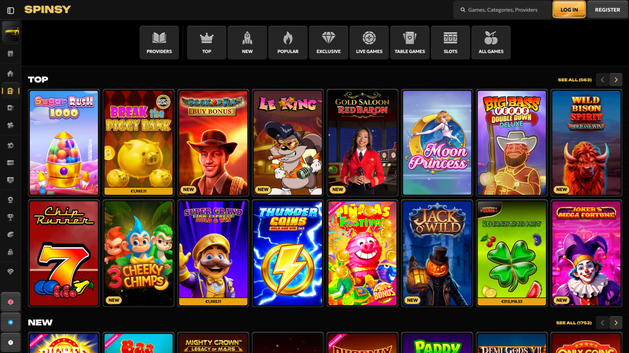
Spinsy Casino Review In Italy

In 2026, in Italy Spinsy Casino offers a clear path: account, payments, games, and break tools, to be managed calmly.

Fortune Gems 2 Slot

Table of Contents

  • The Dog House Megaways Slot
  • Lucky Joker 10 Extra Gifts Slot
  • Sword of Ares Slot
  • Floating Dragon Hold & Spin Slot
  • Leprechaun Riches Slot
  • Fruit Cocktail Slot
  • The Dog House Megaways Slot
  • Sword of Ares Slot
  • Fruit Million Slot
  • The Dog House Megaways Slot
  • Fruit Box Slot
  • Big Fisherman Slot
  • Seven Books Unlimited Slot
  • Fortune Slot Spinsy Casino
  • Sword of Ares Slot
  • Floating Dragon Hold & Spin Slot
  • 9 Mad Hats Slot
  • Floating Dragon Hold & Spin Slot
  • Big Bass Splash Slot
Reviews 1

Spinsy Casino Reviews: What to Note in 2026

Reading opinions online can help, but only if you know what you're looking for. In 2026, many reviews seem the same: short phrases, extreme judgments, zero details about what really happened. The trick is simple: give more weight to comments that describe a concrete step (registration, verification, checkout, support) and less to those that scream "everything perfect" or "everything terrible" without context.

Imagine a common situation: you have half an hour free and want to understand if the platform suits your style. If you get lost in generic opinions, you end up deciding "by gut feeling" and then regret it. If, instead, you look for repeated patterns (same difficulties, same strengths), you turn reading into a reasoned choice.

When we talk about Spinsy Casino available in Italy, the practical goal is not to find absolute approval. It's to understand if you like the flow: you open the account without stress, set limits, have a short session, and know how to stop. If these elements are clear, the rest becomes secondary.

Another useful filter is the language. The most useful opinions often contain doubts, small "it depends" and precise descriptions. Those that are too "polished" sound like advertising. When in doubt, choose concreteness.

How to Recognize Feedback That Serves You

Look at the level of detail and the order of events. A useful comment tells you what the person did before, what they saw next, and where they got stuck. Even criticism can be valuable if it explains the step.

Imagine reading: "I registered, then I looked for the limits and found them in two taps." It's a simple sentence, but it tells you about a real action. Conversely, "fantastic, top" doesn't help you understand what your experience will be like.

Don't look for perfection, look for compatibility. If you play little and want short sessions, opinions that talk about navigation and break tools count more than those obsessed with promotions and "big wins."

When a Negative Comment Is a Signal and When It Isn't

Criticisms should be read calmly. Some indicate expectation problems: the person wanted everything immediate, skipped a step, then got angry. Others describe real friction: unclear screens, repetitive requests, slow support response.

Imagine someone writing: "they asked me for verification and I didn't understand why." This sentence alone is not enough. But if multiple users describe the same point (e.g., confusion about a specific step), then it becomes an operational signal: when you get there, you prepare yourself and won't be surprised.

A simple rule: don't be guided by the emotion of the comment, but by its usefulness. If a criticism helps you avoid a mistake, it's worth gold. If it's just venting, let it go.


A Quick Test Before Committing For Real

Before depositing or planning a long session, it's advisable to do a miniature test. In 2026, the difference between an "ok" experience and a frustrating one often lies in the first ten minutes: access, settings, clarity of the checkout, menu map.

customer feedback 2

Imagine you only have a lunch break. In that window, you don't need to explore everything: you need to understand if you can navigate without confusion. Open your profile, look for control settings, take a look at your history, and verify that the path is linear.

This approach avoids a typical mistake: entering, choosing a game at random, and then discovering too late that you haven't set anything up. If, instead, you prepare the ground, even a short session remains a choice, not a drag.

Registration And First Profile Check

Registration is a simple action, but it should be done at the right time: two minutes without distractions. Enter consistent data and then immediately check where security and preferences are located. It's not an obsession, it's preventive maintenance.

Imagine registering while talking on the phone: you make a typo, then you start trying again and waste time. If you do the procedure calmly, afterwards you just have to choose how to play, not how to fix it.

Immediately after logging in, take a minute to set up control tools: a spending limit or a session reminder. Even if you're not playing yet, that choice protects you when you play "on impulse".

Payments And Withdrawals: Method First, Then Action

The checkout is the area where it pays to be more methodical. Not out of fear, but to avoid trivial mistakes: amounts entered in a hurry, skipped confirmations, last-minute method changes. In 2026, the rule of thumb is this: maintain consistency, take one step at a time, and check the status before trying again.

3 reviews

Imagine being away from home and wanting to do everything in a minute. If you change course halfway through, you get confused: you no longer know what you've confirmed and what you haven't. If, instead, you follow a sequence (choose method, check limit, confirm, verify in history), you always have control.

Withdrawals should also be managed with the same style: clear request, stable data, no impulsive changes while the operation is in progress. If verification is needed, treat it as a normal step, not a "wall".

Imagine the difference between two people: one makes five different attempts in ten minutes, the other makes one clean attempt and then reads the status. The second one solves it faster, almost always, because they don't create confusion in the process.

To make everything more practical, usa this mini-checklist as a quick reference when you are at the checkout.

Operational Step

What to Check

Why It Helps You

Typical Error to Avoid

Before depositing

Personal limit and budget

Avoids impulsive decisions

Entering amounts "at random"

Choice of method

Consistency with profile

Reduces extra requests

Changing method at the last minute

Operation confirmation

Summary and details

Prevents hasty errors

Clicking without reading

Status check

Transaction history

Understand what happened

Trying again without verifying

If something doesn't add up

Message and screen

Faster support

Describing "it doesn't work"

Smartphone Experience In Italy: Pace And Control

Playing on your phone isn't just about "convenience." It's a different mode: more quick taps, more risk of automatic choices. In 2026, if you want a clean experience, you need to set up two things: easy navigation and a ready brake.

Imagine a random evening: you're tired, you open the app, and you get dragged around by menus and pop-ups. If you already have saved favorites and set limits, you don't have to "resist" with willpower. You just need to follow your routine.

In Italy, the platform is aimed at adults, so personal control is part of the experience. You don't need to turn everything into rigid rules; just have a couple of switches ready: session reminders and breaks.

Catalog & Filters: Find Without Endless Scrolling

Sul telefono, scorrere è facile e stancante. I filtri sono la vera differenza: ti fanno passare da “cerco qualcosa” a “scelgo con criterio”. Usa categorie, ricerca e preferiti come strumenti, non come optional.

Imagine finding a game you like and then losing it among dozens of titles. If you save it immediately, you won't start from scratch next time. This also reduces a common trap: switching games every two minutes just because "there are so many."

If you want to stay sharp, choose the session duration first, then the game. A short session needs simplicity, not endless exploration.

Notifications, Limits & Reminders: Your Autopilot

Notifications can be useful or noisy. In 2026, it's best to keep only those you really need: security, access, updates. You can manage the others when you have time, not while you're deciding whether to play.

Imagine receiving a notification while you're working and opening it "just to look." That's how unplanned sessions start. A session reminder, on the other hand, does the opposite: it brings you back to real-time and helps you close when you decided to.

Limits aren't a sad brake; they're a boundary. If you set them beforehand, you don't have to debate them during the session.

Stability & Updates: Small Things That Prevent Trouble

Many mobile problems aren't "mysteries"; they're maintenance: full memory, suspended updates, unstable connection. Keeping your device in order reduces crashes and freezes.

Imagine being on an unstable network and seeing a screen reload. At that moment, don't tap ten times: stop, check the connection, re-enter, and resume from the right spot. One clean attempt is worth more than ten nervous ones.

If possible, update the app when you're relaxed and have a stable connection. This way, you won't find yourself managing updates right in the middle of a session.

Support & Control Tools: What to Use When

Support is for when you have a specific problem, not when you lack clarity. For clarity, you need your settings: limits, breaks, history. In 2026, it works like this: first, try to understand with two internal checks, then ask for help with precise information.

Imagine not finding an item in the menu and immediately contacting support. They'll answer, but you'll waste time. If, instead, you take a quick look through your profile and history, you'll often solve it yourself and save support for real issues.

When you need to write, write well. And when you feel you're losing control, don't wait: usa timeout or self-exclusion. It's an adult decision, not a failure.

How to Write to Support So They Understand You

An effective message contains three things: where you were, what you did, what you saw. No novels, no rants. Just operational information.

Imagine writing 'it doesn't work'. They'll ask you ten questions and you'll get annoyed. If instead you write 'after logging in, when entering the checkout, a message appears and I can't proceed', the conversation becomes quick and concrete.

A trick: attach a screenshot of the message (if possible) and indicate the time. It's not formality, it's context. This way, support doesn't have to guess.

Timeout and Self-Exclusion: Stopping Without Drama

Pause tools exist for a reason: to help you stop when your head isn't clear. Timeout and self-exclusion are practical choices, especially if you play on mobile and take quick actions.

Imagine a bad day: you open the platform to distract yourself and feel like you're chasing losses. In that moment, the best choice isn't 'to resist', it's to press pause. You remove yourself from the flow and return when you're calmer.

If you notice that a short break isn't enough, self-exclusion becomes a safety switch. It's a way to protect your time and budget without relying solely on willpower.

Conclusions: Deciding Without Getting Carried Away

A good decision comes from a simple method. In 2026, to choose a platform, you don't need to believe promises or chase superlatives: you need to understand the real journey, from the first login to session management.

Imagine your priority is peace of mind. Then you look at two things: how easy it is to set limits and how clear the checkout is. If these areas are manageable, the rest of the experience tends to be more orderly too.

Remember the key point: online opinions are useful when you use them as a map, not as a verdict. Look for details, verify with a short test, and build your routine. This way, you remain in control, even when playing from your phone.

Frequently Asked Questions

First, do a 'cold' test: open your profile, look for control settings, check your history, and locate the checkout. Imagine you only have a lunch break: you don't need to try everything, you need to understand if you can quickly find limits and support. If you can navigate without confusion in ten minutes, you already have a useful signal; if you get lost in the menus, it's better to stop and try again calmly, without forcing quick decisions.

The most useful comments describe actions and results: what the person did, what happened next, and where they got stuck. Imagine two sentences: 'top' and 'I set a limit and found it immediately'. The second one really helps you because it talks about a concrete step. Look for repeated patterns, not single extreme judgments, and give more weight to those who recount a consistent experience, even if it includes doubts and 'it depends'.

Set a budget and a personal limit, then choose a method and make a single clean attempt, checking the summary before confirming. Imagine you're on the go and in a hurry: if you change your path halfway, you get confused and don't know what you've already confirmed. If, instead, you follow a simple sequence (method, limit, confirmation, status check), you reduce errors and stay clear-headed even when time is short.

Verifications are part of typical digital service checks and can be triggered in certain situations, especially when you change habits or perform important operations. Imagine requesting a withdrawal and then modifying profile data immediately afterward: you create confusion and risk extra steps. The most effective choice is to keep data stable, calmly complete any checks, and monitor the status in your history without making repeated attempts.

Usa session reminders and limits, and have a temporary break ready. Imagine starting “just for five minutes” and then losing track of time: a reminder brings you back to reality without drama. If you feel you're chasing losses, stop with a timeout instead of continuing out of inertia. In the long run, this is the difference between managed play and impulsive play.

Write where you are in the process, what you did, and what appears on the screen, preferably with a recognizable detail like the time or a screenshot of the message. Imagine writing “it doesn’t work”: support has to ask too many questions, and you waste time. If, instead, you describe “after logging in, at checkout, a message appears and I can’t proceed,” the response becomes faster because the problem is clear and reproducible.

It makes sense when you feel you are no longer choosing calmly. Imagine a stressful day: you open the platform to distract yourself and start making quick decisions without a plan. At that moment, a temporary break is a simple gesture that protects you and gives you space. If the situation repeats or you want a cleaner break, self-exclusion becomes a safety switch: it helps you put time, budget, and clarity back at the center.